Soft vs Stiff Shoe Brush: Which Should You Choose?
A soft brush is for dust and delicate surfaces, while a stiff brush is for dry dirt on tough areas like soles. Many shoes need both, which is why a two-sided brush is a practical option.
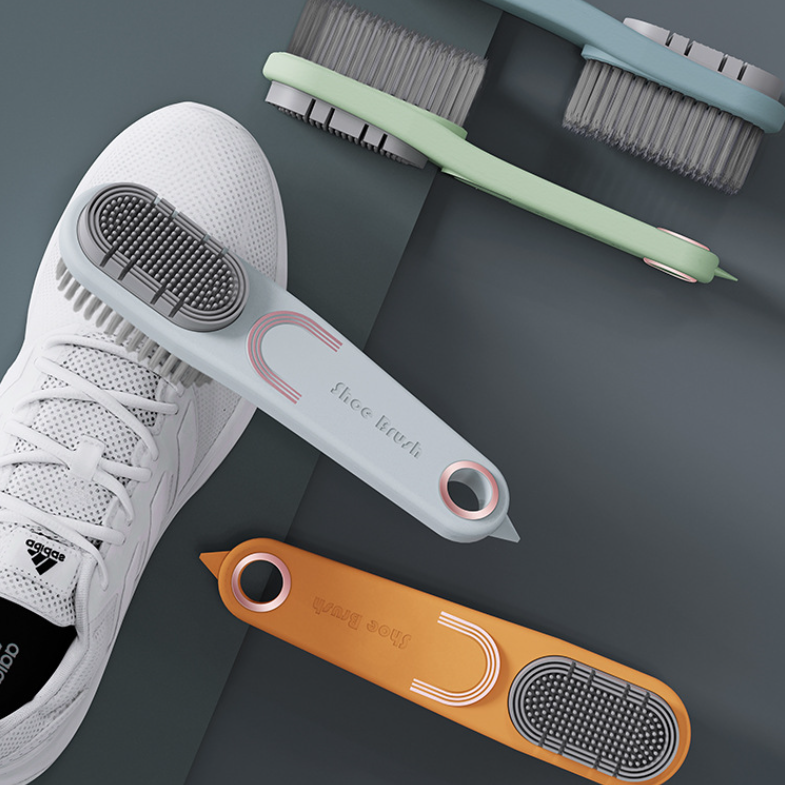
When a soft brush makes sense
Soft bristles are gentle, so they suit the upper of a shoe where the material can scuff or look worn if scrubbed too hard. Think of light dust on leather, canvas, knit or mesh, or the regular brush-down you do after wearing a pair.
Because they are gentle, soft brushes are also the safer starting point when you are unsure about a material. You can always step up to something firmer later, but you cannot undo damage from a brush that was too rough.
Their limit is dried-on dirt, which a soft brush may only brush over rather than loosen.
When a stiff brush makes sense
A stiffer brush has more bite. It is useful on the parts of a shoe that collect the most dirt: the sole edge, the tread and rubber midsoles. Dried mud in grooves is hard to remove with soft bristles, and a firmer brush gets into those gaps.
The trade-off is surface risk. Stiff bristles can mark delicate uppers, so keep them away from fine fabrics, suede or any finish you are unsure about.
Use a stiff brush with a light hand, and test on an inconspicuous spot first if you are not certain about the material.
Why a two-sided brush can replace two tools
Since shoes combine tough and delicate areas, many people end up needing both kinds of brush. A two-sided brush puts both tasks in one hand-sized tool, so you do not need to store or track two separate items.
The Softsole Double-Sided Shoe Brush has two sides for different cleaning tasks, such as loosening dry dirt and brushing off dust. Its compact shape sits comfortably in your hand and is easy to store.
If you clean only one type of shoe, a single dedicated brush may be enough. If your collection is mixed, the two-sided option is simpler.
A quick way to decide
Ask three questions. What are your shoes made of? Mostly delicate materials point to soft. Where does the dirt collect? Mostly on soles and treads points to firmer. How much space and effort do you want to spend? If the answer is little, a two-sided brush covers both.
Whichever you choose, brush dry first, work gently, and test on a hidden spot when in doubt. Keep the brush clean by tapping out debris and rinsing it occasionally, so you are not rubbing old dirt back onto your shoes.
FAQ
Is a soft or stiff brush better for sneakers?
It depends on the area. Soft suits the upper and dust, while a firmer brush helps with dry dirt on soles.
Can a stiff brush damage shoes?
It can mark delicate materials if used with too much pressure. Test on a hidden spot and keep it off fragile finishes.
Do I need both types of brush?
Many people do, since shoes have tough and delicate areas. A two-sided brush lets you cover both tasks with one tool.
Also worth reading: Double Sided Shoe Brush for Easy Shoe Care · How to Clean Sneakers at Home: Simple Steps