6mm vs 8mm Yoga Mat: Which Thickness Suits You?
The gap between 6mm and 8mm is only 2mm, but you can feel it in cushioning, balance and how the mat rolls up. Choose 8mm if comfort on hard floors comes first, and 6mm if you want a firmer, more compact mat.
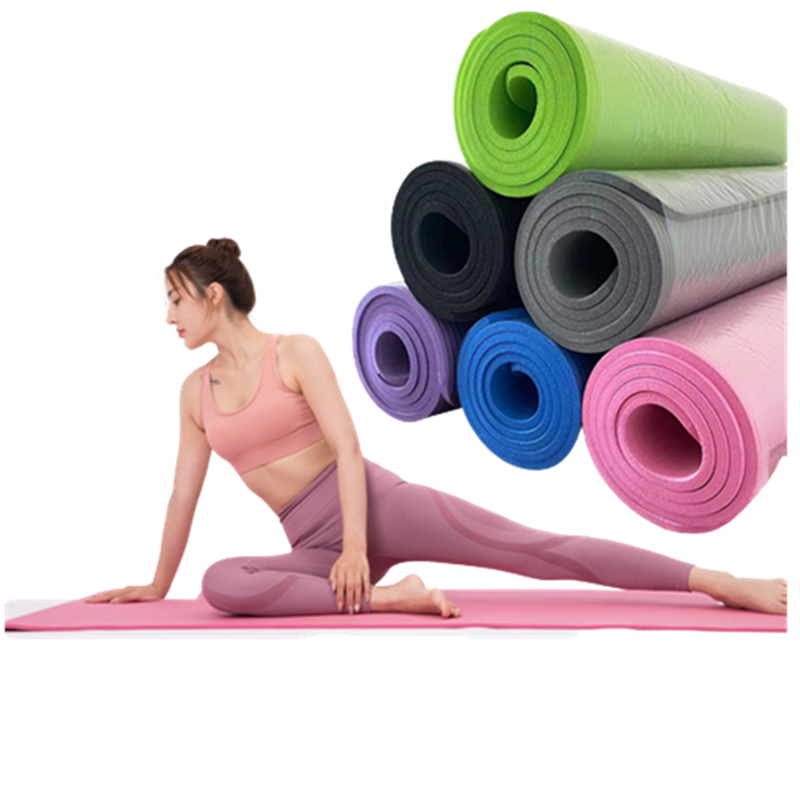
Cushioning and comfort
The 8mm mat has more padding, so it takes the edge off hard floors. That helps in kneeling poses, lunges, floor Pilates and long stretching sessions, where your knees, hips and wrists press into the mat.
A 6mm mat still cushions, but you feel the floor a little more. For many people that is plenty, particularly on carpet or a softer surface.
If you have ever finished a session on a hard floor and noticed pressure points, the extra 2mm is the first thing to try. If you never think about the floor during practice, 6mm is probably enough.
Stability and portability
Thinner mats usually feel more stable in standing balance poses because there is less material to compress under your foot. A 6mm mat is a good middle ground for flowing styles with many standing postures.
Portability also favors 6mm. It rolls slightly tighter and is a bit easier to fit in a bag or strap to a backpack.
The 8mm option trades a little of that for comfort. If your mat mostly lives at home, that trade is easy to accept. If you carry it to classes several times a week, think about the extra bulk before you decide.
Which one should you choose?
Pick 8mm if you practice at home on wood, tile or laminate, and want cushioning for yoga, Pilates and stretching. The Eco-Friendly 8mm Non-Slip Yoga Mat fits that case: it has a textured, non-slip surface designed for secure footing and is lightweight and easy to handle.
Pick 6mm if you favor a firmer feel, practice on carpet, or travel with your mat often.
Whichever you choose, grip matters as much as thickness. A textured surface and a clean, dry floor will do more to keep you steady than a couple of millimeters either way.
FAQ
Is 8mm better than 6mm for a yoga mat?
8mm is more cushioned, which suits hard floors and floor-based work. 6mm is firmer and easier to carry, so neither is better for everyone.
Is a 6mm yoga mat good for beginners?
Yes, many beginners use 6mm. If you practice on a hard floor and want more padding, 8mm may feel more comfortable.
Does a thicker mat make balance poses harder?
It can, since a softer mat compresses under your foot. A textured, non-slip surface and a flat, clean floor help keep you steady.
Also worth reading: Non Slip Yoga Mat for Secure Footing · How Thick Should a Yoga Mat Be?